
Critical Race Theory and the First Amendment: A Primer
Now that I've got your attention, who likes a good story about European history?
Any discussion of critical race theory must begin, naturally, with chainmail.
Not really, but if you must know, it’s good to really know a thing.
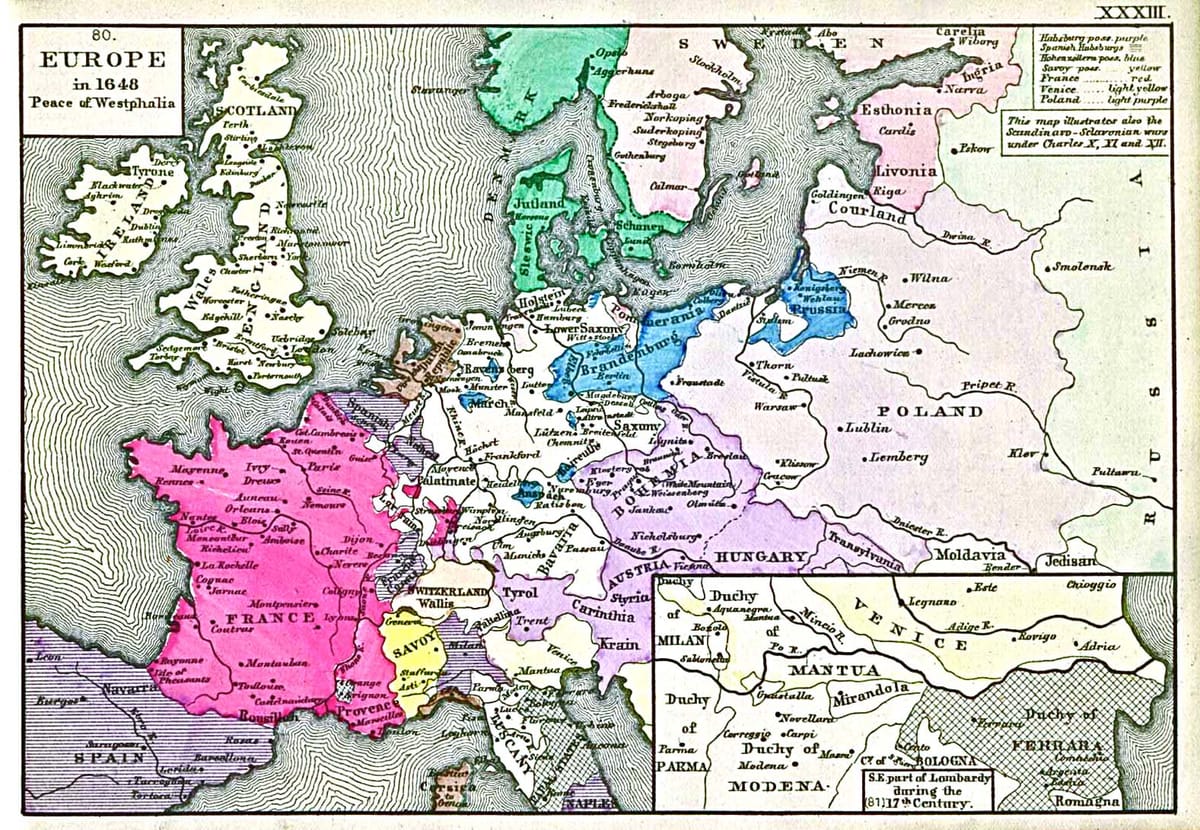
As Europe emerged from the fall of the Western Roman Empire, it broke into a shifting mass of constantly-warring feudal states supported by an inbred aristocracy. Naturlich, this really stable and genius plan lasted until people at large (and not just those religious weirdos living in communes) started to read and realized, “hey, now wait a minute, this book doesn’t actually say that chinless motherfucker gets to be king!”
Following the Renaissance and Protestant Reformation, of course, Europe found out that the Chinese and Ottomans had been hiding all this really cool shit like gunpowder, and decided that cannon-ing the shit out of each other depending on whether one thought the Pope or Martin Luther had the Personal Jesus Phone. After a few hundred years of this, the wars of religion ended and these things called “nation-states” emerged. You see, traditionally, people had been ruled by “kings” (or whatever the linguistic equivalent of that term is), hereditary feudal fiefdoms extensive with just how far Mr. King could march his army to make other people obey him, or by “emperors,” which were large, multi-ethnic confederations ruled by a nominal “king of kings” in a far off place but who could feed and equip a really big army to go enforce his will.
The collapse of the Holy Roman Empire, however, soured a lot of people on this concept, particularly those who wanted to not be Catholic and worship God in places like Geneva or Prussia in their own churches. Thus became the concept of a “nation,” a group of people bound together by a common (at the time) ancestry and value system, and the idea that a “nation” should have the right to self-governance.
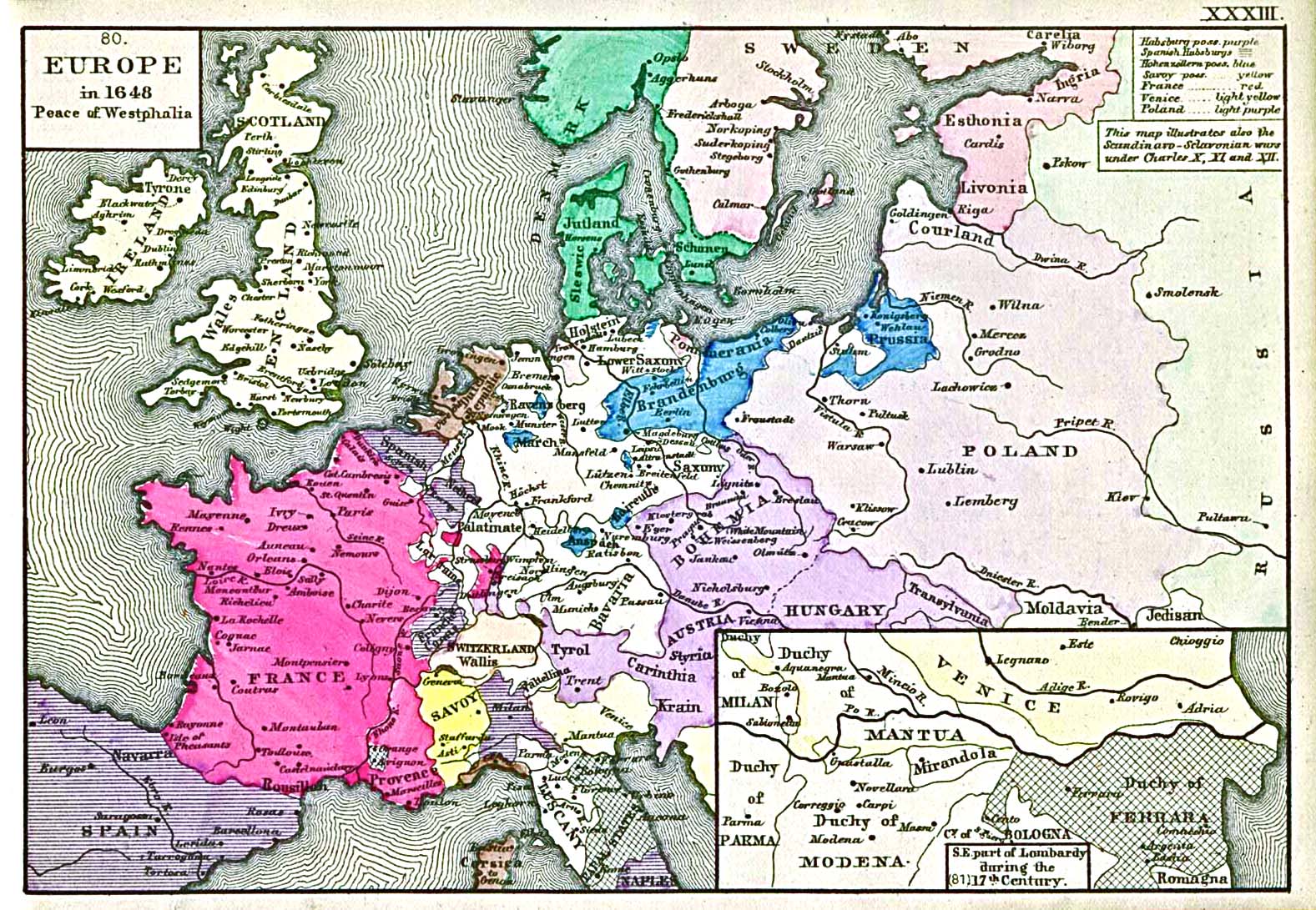
It looked like this.
For about two hundred years, the central European states wrestled with this concept until they thought they had it perfect, at least in Hegel’s eyes: the constitutional monarchic republic. Hegel spent a lot of time arguing that the ideological determinants of history had led us from tribes and chieftains to empires to monarchs to finally the 19th century German perfection.
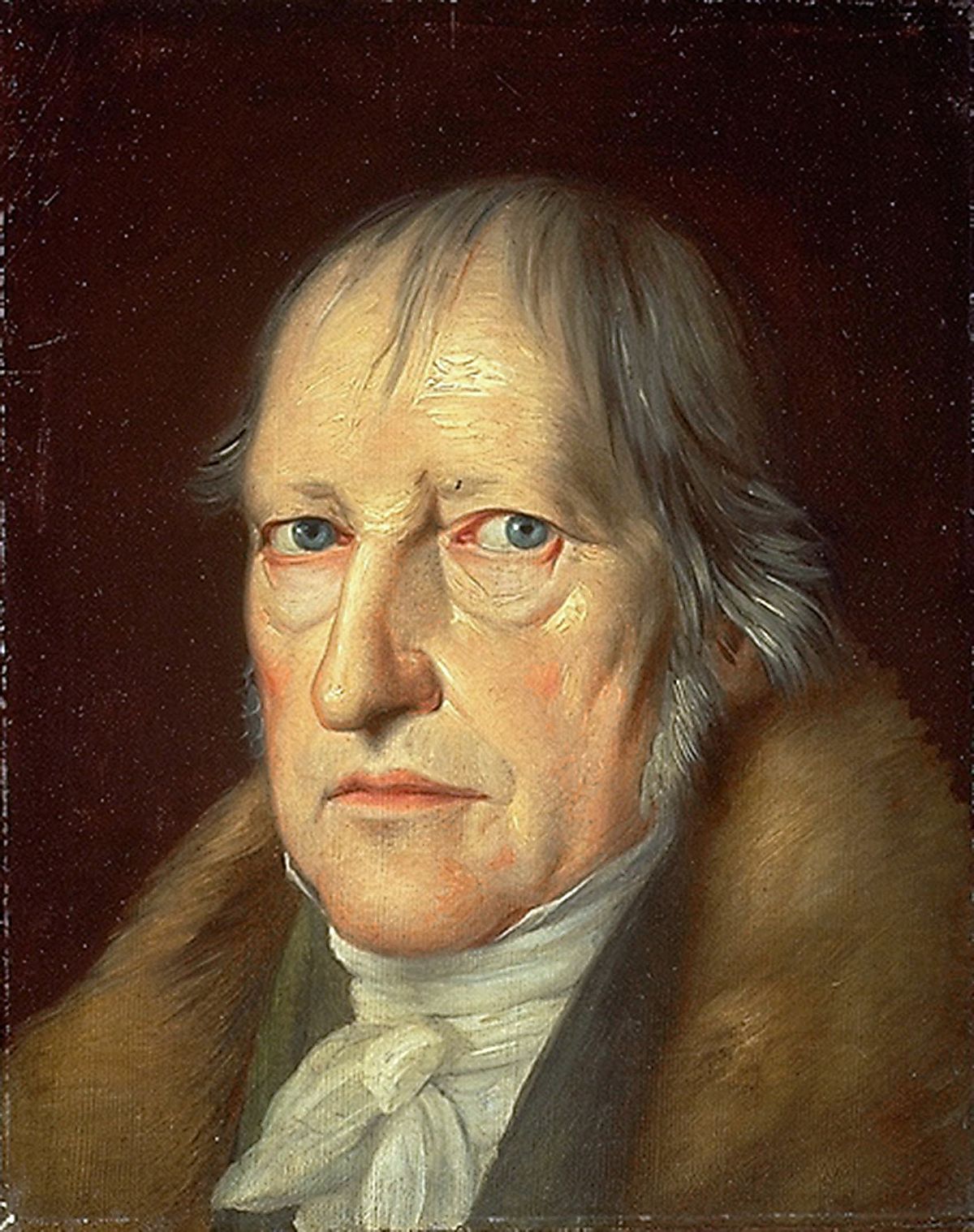
These eyes.
Around this time, following Immanuel Kant a few decades earlier, everyone got really het up about “kritische” philosophy, or philosophy which instead of embarking on great justificatory projects, turned itself inward and asked, “why are we doing this philosophy shit in the first place?” And so virtually every philosopher in the German-speaking sphere of influence who followed Kant, including Hegel, were really big on “kritik,” the notion of going after long-held and cherished beliefs and institutions and holding them up to academic and intellectual scrutiny.
Chief among these early critics was one Karl Marx, known to the American world as the spawn of Satan and a jackal, who conceived of the world not a succession of contrasting and conflicting ideas (Hegel), but as a succession of contrasting and conflicting material states. Young German-speaking philosophers were quite thrilled with Carlos Marcos and his fiery, impassioned writing, as well as his rebellious and exciting politics, and as the 19th century veered toward the 20th, places like London and Vienna became hotbeds of avant-garde socio-political thought, including the emergence of new doctrines like sociology and psychology as distinct from philosophy itself.
This guy was there too.
The upshot of this was that Germanic philosophy was en-vitalized with this idea that philosophers could be more than austere academic nutjobs like Kant or aristocratic fops like Hegel. Philosophers could be out there on the front lines, doing things, and no one proved that like Vladimir Lenin, who went back to his native Russia from Vienna and said, “hmm, how about I get the boys together and we murder the fuck out of our monarchs and mobilize the peasantry and the army into a world-feared fighting force?” And that’s exactly what he did.
And boy were the European academics thrilled. Finally, Garls Marbs’ predictions were coming true, and the egalitarian society of the future, where toil was eliminated in favor of honest labor and free academic and artistic pursuit was so close they could taste it. A world of Viennas, just waiting for Lenin and Trotsky to finish mopping up those pesky Whites.
I won’t bore you with the rest, but let’s say the First World War and the Russian Revolution really shocked a lot of people. China Mieville’s retelling in October is really good and you should devote some time to it. But after the First World War convinced everyone that man was fundamentally flawed in some horrible way, that technological progress would doom us all to extinction, and the Russian revolution failed to produce a communist paradise, European academics were on the ropes.
Some, naturlich, ran the other way and embraced authoritarianism, whether in the form of Stalinesque repression or European fascism, deciding that people were just too flawed to ever govern themselves. Others decided that authority was to be mistrusted in all its forms and joined Prince Kropotkin and Mikhail Bakunin in extolling the virtues of moving to the country, farming the land, and just not having kings or governments or armies or any of that nonsense.
But as the 20s became the 30s and fascism became a “huh, what a weird theory” to “oh my God they’re murdering everyone!” the academics really started to wonder where it all went wrong. And Goethe University in Frankfurt, a group of philosophers got together and said, “let’s try to fix this.” They wanted a “critical” investigation of philosophy itself, drawing upon disparate strains of thought like Marx, Freud, Hegel, Kant, as well as sociology, psychoanalysis, existentialism, and Nietzsche.
During the Weimer Period of Germany (1918-1933), the Frankfurt “School” of thought got along OK, but sometime around 1928 they started using their critical theory to explain the rise of Naziism, and the NSDAP did not like it. So many of them ended up fleeing Germany (see above where the Germans were wholesale murdering people they didn’t like), first to Geneva, and then to the United States, where they continued to develop this “critical theory.”

If you’re still reading this, God save you.
Now that we’ve got all that fun history out of the way, you understand WHY the critical theorists came up with what they did. So let’s explain what it is they came up with.
Critical theory isn’t a single set of “ideas” or a set of postulates or a philosophical system that can be so reduced. It’s more of a method, a way of doing philosophy, that says that the philosopher should be socially engaged and attempting to bend philosophy’s power to creating a better, more just world. To do so, it critiques the socio-cultural drivers of history: ideas, material conditions, psychology, the natural sciences, etc. By “critique,” I do not mean the colloquial sense of the term in that it “says bad things about,” but rather investigates the foundational assumptions and bases of these various ways of engaging with the world. By its nature, it is open, democratic, and geared toward the end of being liberatory and revealing the hidden assumptions and power structures of the world. It has no definite political orientation, is not necessarily Marxist, but was associated closely with the post-war Marxist theories and general left-leaning politics.
It waded into the cultural wars of the 1960s, when the first postwar children made it into the collegiate academies and started to question the values of their parents’ generation, a generation raised on the privation and patriotism of the Second World War. A generation which saw massive social upheaval in the form of the Civil Rights Movement, various liberatory movements in Asia and Latin America, and imperialist wars of aggression by American and European powers to stifle those same liberatory movements.
It became associated with anti-Americanism precisely because the thinkers and movers were (1) largely of European extraction and (2) were harshly critical of things like banana republics and CIA tactics in Latin America. Which, looking back with history’s jaundiced eye, they may have been right about.
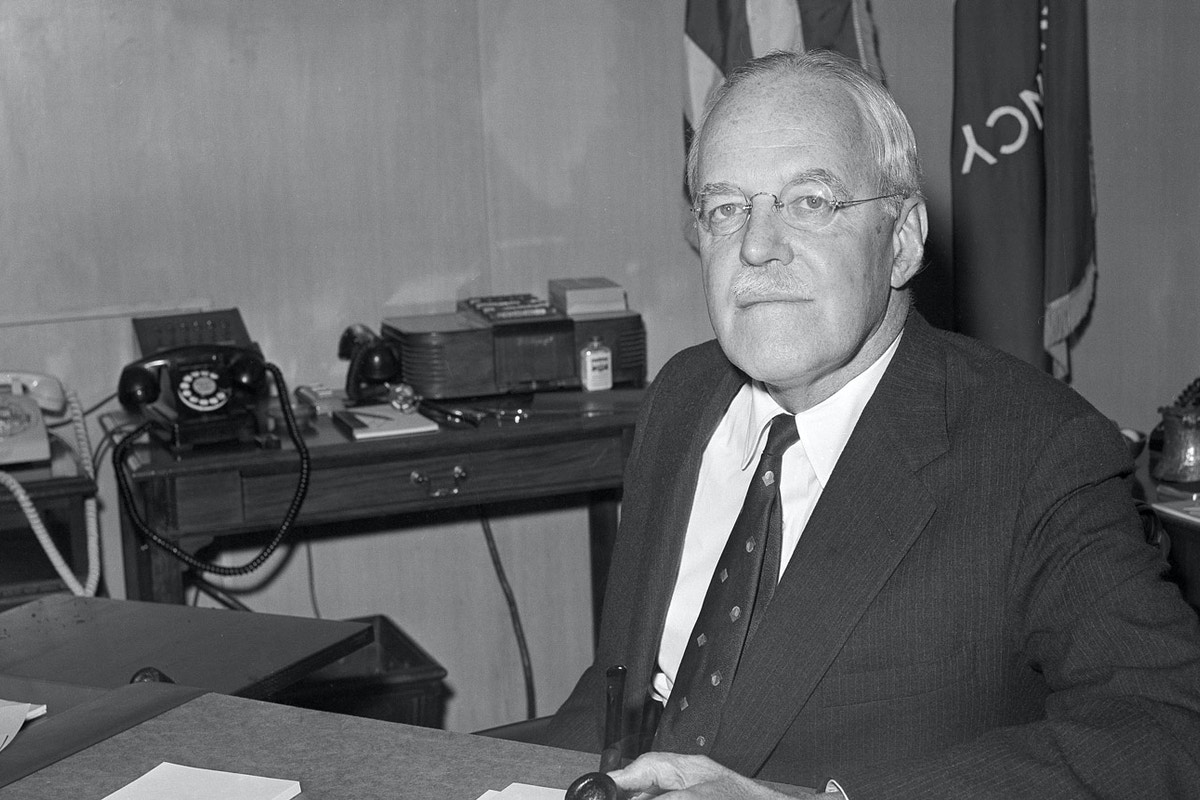
“Trust me, if there’s a hell, the Dulles brothers are in it, doing unspeakable things with bananas.” — Mallory Archer
That aside, as the 60s gave way to the 70s, a SECOND, COMPETING STRAIN of philosophical analysis emerged, as new theorists were upset with what they perceived as the limitations of critical theory. These mostly French-speaking philosophers moved away from a critique of culture to a critique of language and ideology itself, mostly belonging to schools with boring names like “post-structuralism” and “pragmatism.” The American right wing, in search of new demon windmills at which to tilt, started calling them “postmodernists” after Lyotard’s 1979 book The Postmodern Condition, although Lyotard famously described the postmodern condition itself as a BAD CONSEQUENCE of too much TV and mass media consumption that led to a populace capable of reading (“literate”) without any true understanding of ideas, a world of people just educated enough to push the button to make the cogs at the factory but no sense of how to make the machine that makes the cogs. Regardless, now the right had a term and an enemy, and after the “postmodernists” they went, labeling them as destructive anarchists bent on smashing apple pie, outlawing baseball, Jesus, and hard work, and in general undermining the American way of life.
It didn’t help that academics at this period did publish many works questioning whether things like the post-war focus on the “nuclear” family were in fact superior to other societal models, such as that of the village (remember the fucking FUROR when Hillary Clinton dared suggest it might take a village to raise a child, instead of a barrel-chested pioneer man raising his brood of kids with his blonde and traditional wife holding off bears and shit?). This naturally fed into the suggestion that the left was out to destroy every cherished institution (instead of just making you ask questions about WHY the post-war nuclear family suddenly became the ideal when for like two thousand years or more it had not been).
Enter the late 80s and early 90s, when critical theory itself began to specialize and fracture into things like “critical legal studies” (applying the methods of critical theory to legal analysis) and “critical race theory” (applying the methods of critical theory to the study of race and politics).
Nowadays, the only people who get their knickers in a twist over “postmodernism” are muppet-voiced Canadian nobodies and anime avatared unfuckables sitting in mom’s basement, so we needed a new villain, a new standard bearer of the downfall of society. And at least so far in 2020, @antisemitismcow’s timeline notwithstanding, the old standby of blaming the Jews for everything isn’t in vogue. So we have “critical race theory,” and your orange turdgoblin of a president signing an executive order forbidding the teaching of critical race theory. Obviously this is an unconstitutional and unenforceable order and the federal government can no more forbid the teaching of a particular viewpoint than Trump can shit without half a jar of Metamucil and Mike Pence lovingly applying olive oil, but that’s beside the point. Why the ire?
“Critical race theory,” as has been explained, doesn’t have a set of “tenets” or basic beliefs common to it. It’s a method for examining the way society relates to and orients itself toward race in terms of law, politics, and culture. Critical race theorists are just scholars applying the methods of critical theory to race relations. Ooooh, scary.
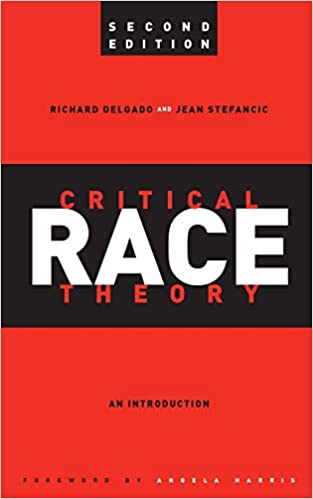
This book is banned in the military, but the Turner Diaries are not. Think about it.
The problem, as Trump sees it, is that critical race theory asks questions that make his white boomer base uncomfortable, like “why is it, Darrell, that you’d object to your daughter dating a black man?” and “Karen, is the real reason you don’t like MSG that you’re a racist moron?” America, you have to admit, is a racist country. I do not mean that the majority of Americans are racist, I mean that for the great majority of our country’s history, discrimination based on race has not only been legal but sometimes obligatory. YOUR PARENTS WENT TO SEGREGATED SCHOOLS, and if you’re young enough that they didn’t, ask them if it was OK for the star black running back of the football team to date the pretty white head cheerleader. This has changed in recent times, of course, but a critical race theorist does what the great boomer masses find heretical and unthinkable: criticize their cherished, nostalgia-strewn memories of the past golden age of America, before they ruined everything by electing a movie cowboy clown as President in 1980. Try telling a boomer that America isn’t perfect, great, and unique among nations, and they’ll stick their fingers in their ears, start singing the national anthem, and probably try to murder you.
Which is why Trump has started picking on critical race theory, because like all critical theories, it has the temerity to suggest that maybe we can do things a little bit better than they were before, and each generation can propel us a little further forward along history’s spiral toward a world in which we’re not such shitbags to each other. And for Boomers, that world existed for .5 seconds when they were 9 and Wally and the Beav played baseball or some shit in a perfectly white world where they did not have to wrestle with the fact that Sergeant Friendly who helped them get their baseball back from Old Man Withers’s yard went home, got a good drunk on, beat his wife, snuck out to a gay bathhouse because he was so deep in the closet he was finding Christmas presents, and to assuage his guilt over giving his buddy Ted a handy-j in the bar bathroom, stopped over on “that” side of town to beat a few black teenagers senseless. When you face the ugliness of the world, sometimes a comforting fantasy is better.
And that’s what leads people to think movie clown cowboys and TV “billionaire” playboys have political acumen beyond their means: it sells them on the fantasy world that they’ve inhabited since the flow of good cocaine stopped in 1978. They’re actually mired in the postmodern condition, but are too anti-intellectual to pull themselves out of it, so they lash out in reactionary ignorance at the person who says, “dude, you’re stuck, here’s a branch.”
Anyway, if you read all of that, come find me sometime and I’ll stand you to a beer or a lemonade or whatever it is you like to drink, and we’ll toast the nukes falling.
Slainte.